This One Time at Dog Agility Class

Featured

Derp weaves

This week in class we talked about why agility is so hard. The answer is: so many moving parts! You need to be good at 3 dimensional spaces, you are moving, the dog is moving FAST and that is BEFORE you get to the dog training aspect. I see a lot of people take a few classes and then BAM!, they enter a trial. The fallout is that the dog gets frustrated, the human gets frustrated and the wheels fall off. 

Nowadays you CAN enter a trial for training purposes, most venues have some sort of training in the ring available. My wish is that more people would use that opportunity to get a feel for what a trial is like, make sure their dog is successful and continue to train!

Agility training never stops! There are always skills you can brush up on, solidify, generalize, etc.

My current agility dogs are 5, 4 and 1 year old. The two older dogs spent a ton of time training in the ring. I had to completely remove BeadyEye from competition while I created a positive conditioned emotional response to the “GO” sound from the timer box. I think we were at that task for about 6 months, then I went to a baby dog trial that would allow us to skip the “GO” sound at first. We added it back in slowly and now BeadyEye hears the “GO” sound and he knows it’s agility time! 

I also spent a ton of time entering trials where I could make my own courses (for safety and training purposes), even if I couldn’t run with a toy. It’s so important to make every run a happy experience for you and your dog, otherwise why are you doing agility?

At Journey Agility & Dog Training we can help you set attainable goals that are FUN! WOOT!

Got Reinforcement EVENTS??

A swedish vallhund at sunset

Today in sniffer class we discussed how to make rewarding our dogs exciting for the dogs! Not all dogs find food more reinforcing than chasing lizards or squirrels. Some dogs are just fine with hunting for all kinds of things during a search instead of finding odor! In no particular order they will find: the pistachio shell in the corner, the odor, the scent pad of the last handler, where the lizard ran across the path, saliva from the previous two dogs, the mostly dead bird under the shelf and the bread under the window. We want the dog to be excited about finding odor! So much so that they give up on hunting for other stuff! 

Any sniffing sport is a team based sport, the dog is doing the finding of whatever it is for YOU! I hope you are excited and proud when they find it! You should act that way with genuine gratitude! 

You might be able to find other ways to make the reward process an EVENT! You could feed better treats for longer (like steak, chicken or cheese)!! You could have the dog chase your hand for the treat! You could try a toy or a food toy to invite some prey drive! You could incorporate super fun tricks at source! You can try whispering in your dogs’ ear or petting them on the chest! Every dog is different so every dog/handler team will have a different party together. 

You want to avoid ho hum! Unless your dog is already floating in the clouds with excitement, then they may need some WOOT in their life. Help your dog find the JOY in using their nose!

Processing…
Success! You're on the list.

Teach Me A New Trick

That saying, “you can’t teach an old dog new tricks”, can sometimes be true, even with people! We get stuck in our ways and have a hard time trying something new. You can find a way past the scariness and potential failure if you are motivated enough and go slow during the process.

Dogs are the same way! When helping your dog learn something new, break down the steps into tiny behaviors! Start with the first tiny behavior and don’t make it more difficult until your dog is super successful and comfortable! Use a really good reward for your dog as they try this new thing. Dogs love human food, smelly things, and items that they don’t usually get. Or you can use their favorite toy to play with them.

Sometimes you have to get creative to help motivate a dog! This week in class, we used running down the alley and sniffing and peeing on things outside to help Benny be more excited about doing agility.

At Journey Agility, we love helping dogs and humans find a way to learn new tricks!

Processing…
Success! You're on the list.

Reduce, Reuse, Recycle, Re-home?, RETRAIN

Bob

Bob

You have either had one or will have one in your future.  That one dog that just doesn’t fit, doesn’t want to do the dog sport of your choice, isn’t the high level prospect you were hoping for, and learns at a different rate or in a different way.

I have had two of these dogs and was told multiple times by multiple people to give back to the breeder, re-home, put down, or retire them.  The weird thing is I didn’t.  I didn’t listen to their voices or the voices in my head.  And it wasn’t just because I made the commitment to them as puppies.  I truly believe that there is a better home out there for every dog I own (stole that from an article in a Schutzhund magazine a few years back).  I don’t flatter myself that I am the best trainer, handler, owner, caretaker or partner; I have issues and so does everyone else who owns a dog!  That thought keeps me humble and probably makes me try a little harder when things are going awry.

Bob didn’t want to do agility.  He didn’t really want to do it from the start.  And I originally got him to be my competitive agility dog.  We were going to go to Nationals!  World Team Tryouts!  Competitions overseas!  Only Bob had a different plan for us.  It just took me 5 years to figure out.  And people would say Bob is the slow learner…

Bob would probably have been happier in a family with kids, or in a home that took him herding, or even with a handler who just wanted to do agility at the local level.  I considered re-homing him many times but somehow he stuck with me.  We are going to enter our first disc competition in less than a month!  My keyboard is sticky from the tears I just wiped!  Bob!  Competition!  Doing something that he dearly loves!  Yay!  I just had to open my eyes to his idea of a good time!  Learning a new sport is never easy and we have had our shares of ups and downs, crash and burns, laughter and head shaking along the way.  We certainly won’t be the best, but we aren’t trying to be.  It’s just me and my Bob A Lob, doing something together that we both enjoy.

Wad Frizz Club

Wad Frizz Club

Don’t Forget the Table!  (Or the Bacon!)

As an agility instructor, I have the best intentions for my students, I want them to succeed, grow, meet their goals, and have fun!  I have been doing agility for 15 years and sometimes I take things for granted; table criteria is an example.  If you train a dog through our program, we have done the table from the ground up and talked about the difference between USDAA and AKC and when to release your dog and how to keep your dog motivated on the table and how to keep them staying on the table and etc.  BUT in this situation it is a a junior handler who is learning handling on a seasoned dog.  I put her in a Novice Handling class, her dog was already trained on the equipment, and we just need to teach the junior handler some moves.  So she didn’t hear the spiels about the table.  And even though I am pretty sure we did the table once or twice  in her class, I am 100% sure we rewarded the dog on the table and we didn’t talk about the “rules” of the table in a competition.

After six months this junior handler entered her first real trial, AKC at the Masters level (the dog has her MACH and has been to the invitational.)  I know her goal was to have fun, and she loves her dogs, and her parents promote a good attitude in sports.  In her standard run, as the dog preformed the table, the junior handler stepped into pet and hug her dog; she had already NQ’d so the E didn’t really matter.  How cute is that?  How cool is it that the handler loves her dog so much it was a natural reaction to step in and reward?  As the coach and instructor I kicked myself for not thinking to explain the rules for the table.  I took it for granted!  Her parents never thought of it either, why would we?

It is a very cool testimony to this junior handler’s relationship with her dog and her attitude towards competition that she loved on her dog in the middle of the run.  The judge didn’t whistle her off; instead she met her at the finish line to explain the rules (which I WISH I had thought to do.)  Doing agility has an aspect of a learning curve!  Teaching beginners is tough, and I have a knack for teaching in general, but there are so many things that have to be learned out in the ring!

This junior handler and her dog went on to earn their first double Q the next day and I know they are destined for great things!  What a beautiful start to their career!

Double QQ by Scott Klar

Double QQ by Scott Klar

Stage Fright and Being Naked!

I was listening to Ted Talk the other day and Joe Kowan was discussing stage fright; the next day I was experiencing stage fright first hand as Bob and I did our first REAL disc demo.  I do agility every day, I run in a trial some weekends, I have trialed at the highest level in agility; I can do agility in my sleep.  Disc on the other hand, is new to me.  And even though I practice, I find it hard.  And even though Bob likes it, he is not perfect.  We have a looooong way to go.

Performing in front of other people causes anxiety and stress, for both the DOG and the HANDLER.  Don’t deny it!  Embrace it!  I knew that doing a Frisbee demo with Bob would be hard.  I had run through my routine a million times in my head, I had done it a few times in real time.  I like to visualize my disc performance or agility run from start to finish, including getting my dog from my crate, pottying them, warming up, doing the run, finishing, rewarding and cooling down.  While this set of steps can help you be successful, don’t get too caught up in the “routine”, you have to be prepared for the unexpected and be flexible with your habits.  Esteban Fernandezlopez discusses this in a Bad Dog Agility Podcast on Improving Mental Game.  I like to plan what I am doing before an agility run but I am not going to freak out if I don’t have my special toy or certain treats.  A routine is a great way to generate confidence at a trial!  Read my post on getting organized for your agility run called Crate to Crate.

The disc demo went well because I trusted Bob to do what we had already done!  And NO!  I didn’t have treats out there!  Just discs and my dog!  We had also trained for this, practicing disc with the treats over on the table (although most of the time the Frisbee is the reward, some tricks like roll over, were taught with treats).  It was hard to step out there in front of a crowd of people, my heart rate was elevated, and my breathing was faster, my thoughts were not clear; I couldn’t even remember all of the steps in our performance!!!  But I took a deep breath, threw the first disc, and FAKED it!!!  And I was naked!  And so was Bob!  No treats!  No collar!  Just trust and love for my dog and doing disc together!

Make sure you practice you AND your dog being naked!  Train like you show, show like you train!  Nothing is worse than your dog going through an extinction behavior (like not releasing from the dogwalk) because they are suddenly not getting treats at the rate they gets treats in training.  Set up your training so that it is similar to how you trial!

When you are new to agility, obedience, flyball, schutzhund, tracking, fill in the blank with your dog sport of choice, you need a list of steps (called steps to perform) that you are going to mostly follow from start to finish, you need a positive attitude and a smile, you need a love for your dog and a trust in what you have done during training and you need to remember that you are doing this because it is FUN!  Force yourself to smile if you have to!

If it isn’t fun, if it is too stressful, if your dog checks out and you can’t get them back, if you are vomiting in the bathroom (Cynosports 2009, not me but some unknown GP finalist), you should probably reassess your goals.  We are NOT curing cancer!!!  It is a dog sport!  It is a hobby!

Here is a worksheet to help you design your own list of steps to perform, .  This is just one of many worksheets that help my clients and I to be successful on our agility journey!

bob disc demo

bob disc demo

Are You Nagging Your Dog?

I have been thinking about dog training lately; specifically about how we communicate with our dogs.
In the basic essence and over simplified philosophy of dog training you are rewarding what you like and ignoring what you don’t like.  Although negative reward markers MIGHT have their place in training occasionally, I do see them being over used.  Things like “eh”, “ah”, “no”, a heavy sigh, slouching of shoulders, blaming the dog for a mistake, etc can turn your dog off from their task.  And corrections certainly have no place in our made up “fun” sport of agility.  Instead, try ignoring what went wrong, or laugh like a silly goose as you say “let’s go try again” in a happy voice!
These two articles (links below) are great at describing how things we do as trainers can shut a dog down.  Nancy Tanner’s article says “Wanting or expecting a behavior from your dog that is perfect, and not allowing it to happen with time and maturity, will in fact shut your dog down.”  And the Dogwood article says “Imagine if every time you raised your hand and tried to answer a question in class your teacher screams at you “NO YOU ARE WRONG”. No matter how many ways or times you tried to answer the question, you were told that you were wrong and never told what the correct answer was.”
Anecdotal evidence from my experience training Bob tells me this is true (my friend Amber was present and can corroborate this story).  Bob is VERY soft, and doesn’t have inherent drive for agility.  When I was teaching his weave poles he started out awesome!  And then we had a session where things went south, I responded in a “eh” sort of way, put too much pressure on him, slouched and sighed, as I tried again and again, and he was done.  It took many sessions to regain what we had.  And I created even more worry for agility in his mind.  I re-experienced this with him training a Frisbee trick just the other day!  I was teaching a backwards circle through my legs.  He didn’t quite get it, and started to worry (I can see it in his eyes and body posture).  I decided to go all the way back to using food and going step by step because Bob was not having fun.  I took my time, NEVER marked anything with a negative, ignored when it went bad, and partied when it went well.  IT TOOK 2 WEEKS!  Which, in my mind is a really long time.  But that is Bob.  And now???? You can’t get him to not to the trick, and he slams through it like it is the funnest thing ever (ouch, my poor knees and calves).  But if I had made those “no” noises, I doubt if we would have gotten the trick to happen.  And we just did our trick in public, Bob was HAPPY to do it, no worries!!
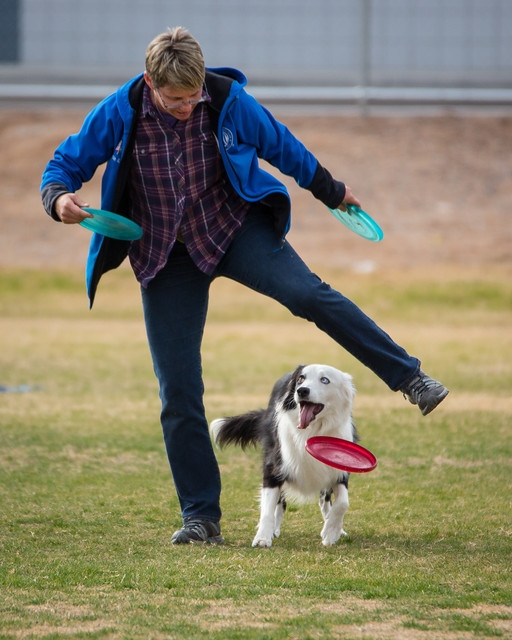
Bob backwards circle through legs

Bob backwards circle through legs

In a Bad Dog Agility Podcast Denise Fenzi used a great example about negative reward markers by describing the of teaching of math to a little kid.  If you are going through the multiplication tables and you get to the sixes and the child starts having a hard time with 6 X 3, do you say “NO that is wrong?” and make them repeat it 5 times?  They probably aren’t going to get it right no matter how many times you do it.  Better to go back to the basics, talk about 6 X 1 and 6 X 2, do the three’s, show a number line using sixes, etc. And praise the child when they are correct, even if it is a small piece.  Those pieces add up over time!  Would you want to work for someone who only told you when you were wrong? Or verbally pointed it out every time you made a mistake?

Try it!  Go run a small sequence, and notice if you are correcting, using “no”, making the dog repeat, slouching, etc.  If you are, try to ignore the things you don’t like, just be quiet and focus on the things that are AWESOME, reward those things!  And then go back and break down the things your dog is struggling with, chances are you were causing the mistake anyway 🙂 so why would you correct or negatively mark something that was your fault?  Agility is a game we play with our dogs.  We are NOT curing cancer.  And no body died.
Here are the two articles:

http://nancytanner.com/2015/01/18/shutting-a-dog-down/

Hug your dogs!  Run EVERY run like it is your last, because you just never know. 🙂
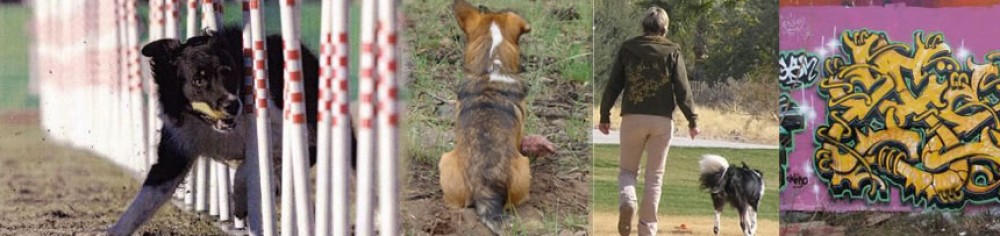
Learning A New Skill

Bob and I are learning to play Frisbee (freestyle).  Huge thanx to Wendi, who is teaching us everything she knows!  Learning a new skill puts me in the same boat as my Beginner Agility students.  It is a humbling experience!  All the different holds and throws, fidgets, rollers, around the world, long throws, types and weights of the discs, and much more!  And Bob has to learn to catch, grip, drop, jump, etc! Bob LOVES Frisbee!  Waaaaay more than agility.  I have kept it positive and fun for him (and he already LOVED it), he gets so excited when he sees the disc!

When we first started, we had some bad habits we had to break; like dropping the disc to catch another.   Bob is VERY sensitive and I was careful about helping him learn the drop skill with verbal encouragement and happy body language even when we have to end on a less than great performance.

Some of the skills don’t come natural for Bob; he is a big bodied border collie and not light on his feet.  He will probably never get good at vaults or flips in the air.  But we are ok with that!  He and I are bonding and having fun and that is what counts!  A happy Bob is a good thing!

Learning a new skill is FUN!  And HARD!  It provides a mental and physical challenge for me!  I work hard at it, practice almost every day (just like I would do with any other dog training), watch videos, try new things, make a fool out of myself, laugh, make new friends and slowly get better!  The learning curve has been steep and my success rate has been up and down and all over the place.  NOT linear!  No beginners luck or irrational confidence here!!  Some spazzy throws and a less than ideal sized dog make for some cringing moments.  But Bob and I will keep working, and taking advice, and trying new things and enjoying our time together as noob’s in the sport of disc!

Love Sofa King Rad Bobalicious!

Love Sofa King Rad Bobalicious!

Agility is Just Dog Training

A while back I posted a question on facebook (I thought it was rhetorical) about dog training and agility.  I got some pretty strange answers.  Been thinking about it ever since…

Using rewards during agility training is very important in order to motivate your dog and to reinforce WHERE you want your dog to be.  I am a dog trainer first and an agility handler second.  All of my agility handling is TRAINED AND REWARDED with my dogs.  I am not a fantastic handler; my dogs are well TRAINED to do what I want them to when cued by my handling.

Agility (as with most dog sports) is based on training a dog to do a behavior.  When in doubt, stop and reward!  I probably reward my dogs too often.  I break sequences up into very small pieces; I reward a tight turn or a nice rear in the middle of a course (even with my Masters level dogs), I jackpot amazing weave pole performances and contacts and start lines and keeping the bars up and running fast and, and, and…….

A reward is defined as “a thing given in recognition of one’s effort”.  Notice that in this definition the reward is “given”, it needs to come from you or be done with you and therefore should be controlled by you!  If the reward is something the dog can just help themselves to (sniffing the ground, running around and doing equipment) then it is not a reward that is coming from the handler.  I have used a “let’s go sniff” reward, where me and my dog get to go to a designated tree and the dog is allowed to sniff there, but it is not a “sniff anywhere you want” sort of behavior, it is a conscientious behavior that my dog and I go do together in a specific spot.  Also, the dog needs to find whatever is being used to reward rewarding.  The dog chooses what is rewarding, not the handler.  To quote Suzanne Clotheir “A reward is always unexpected, unseen and comes after the appropriate behavior or response.” So when doing agility the reward needs to come from the handler after a good effort has been put in by the dog, it needs to be something the dog likes and needs to be done in appropriate timing (quickly) after the dog did the good effort.

You can also use WHERE the reward is placed to reinforce specific behavior.  If I want my dog to turn tight around a jump, I will place the reward on the ground near the wing.  If I want my dog to learn to go away from me, I will signal and toss the reward away.  If I want my dog to learn to finish the weaves no matter what I am doing as a handler, I will toss the toy in the dog’s path as they finish the weaves as I continue to run.  If I want my dog to love the table I will reward ON the table, not after they get off.  The list goes on and on.  WHERE you reward is important!!!! So, it is important to use a reward that your dog likes, that you control, and is easily placed where you want it.

Using a reward when training your dog allows you to control where, when and how much/how long the reward happens.  Agility is just training your dog A LOT of behaviors and then chaining them all together!  Frequently reinforcing those behaviors, in the correct location, with rewards will help your dog understand each piece so that when you string the behaviors together you get ROCK SOLID performances!

There is NO Magic Pill

Border Collie

I had an interesting week to reflect on and think about dog training and its trials and tribulations.  I know that as humans we are very “I want it now”, oriented towards instant gratification with no impulse control. There is no potion, juice or magic pill that will fix a dog’s behavior problems (for the dog OR the owner).  I am NOT a pet behaviorist.  All I can do is try to identify the problem in a situation and suggest ways for the handler to reinforce the dog for doing something different and better.

“My dog barks all the time, how can I make him be quiet?”  My new response: “How would you make a crying baby be quiet?”  First of all, you wouldn’t MAKE the baby do anything, so why do we want to make our dogs do something?  Second, WHY is the baby crying (dog barking)?  Are all needs being met?  Is there too much commotion in the house?  An incompatible behavior to barking is chewing on a (fill in the blank with whatever your dog likes).  Maybe even have your dog chewing in a crate.  MANAGE the behavior.  Your dog barks when they see children walking to school at 8:15 AM.  Sounds like the perfect time to do some 1 on 1 training, play fetch in the back yard, or chew in a crate.  Your dog barks when your grandkids come to visit after school at 4:00 PM.  Chew in crate!  I wonder if you provided your dog with a chew at 3:55 PM EVERY day in their crate if your dog would eventually meet you at the crate door at 3:54 PM with a demanding “I want my chew” look?  I think so.  Dogs are predictable and they like consistency.  That is why they are easy to train.

“My dog doesn’t like all the dogs in my house, how can I make them get along?” Some dogs don’t like other dogs.  It sucks.  I’m sorry.  Some people don’t like certain people.  Can you force your dog to like the other dogs?  Or is it better to manage their behavior?  People have thumbs.  Use them.  Doors, crates, gates, etc. all work well with thumbs.  Use them.

There is no 30 minute Cesar Milan solution to the issues your dog has.  There are no magic potions or pills or collars or whatever.  You need to reinforce the behavior you like and find other behaviors to take over the ones you do not like.  And manage your dog.

“My dog doesn’t want to go in the pool, how do I teach them to swim?”  A lot of people would just throw their dog in.  Would you throw your child that is afraid of heights off a cliff?  Would that experience make them unafraid of cliffs?

“My dog breaks their start line.” Have you broken down the behavior and trained it from the bottom up?  Have you rewarded it 1000+ times? Have you taken it on the road to proof and generalize it?  Have you set clear criteria and stuck to it?

“My dog has problems jumping.”  How did you train jumping?  Oh you didn’t???????  80% of all agility courses are jumps.  Just sayin’.

The list goes on but I will stop.

I give a lot of homework in my classes because I believe in dog training.  It is your choice to not do your homework.  It will be reflected in your dog and your dog’s behavior(s).  I will not change my behavior and stop giving homework because people are lazy and complain, or don’t do it, or laugh about it.  I know that rewarding your dog for the behaviors that you like will make you and your dog better at whatever it is you are trying to do.  Period.  There are people out there that will take your money to “train” your dog with short cuts and force.  Let me know how that goes for you.  And now I must go drink some magic juice…..